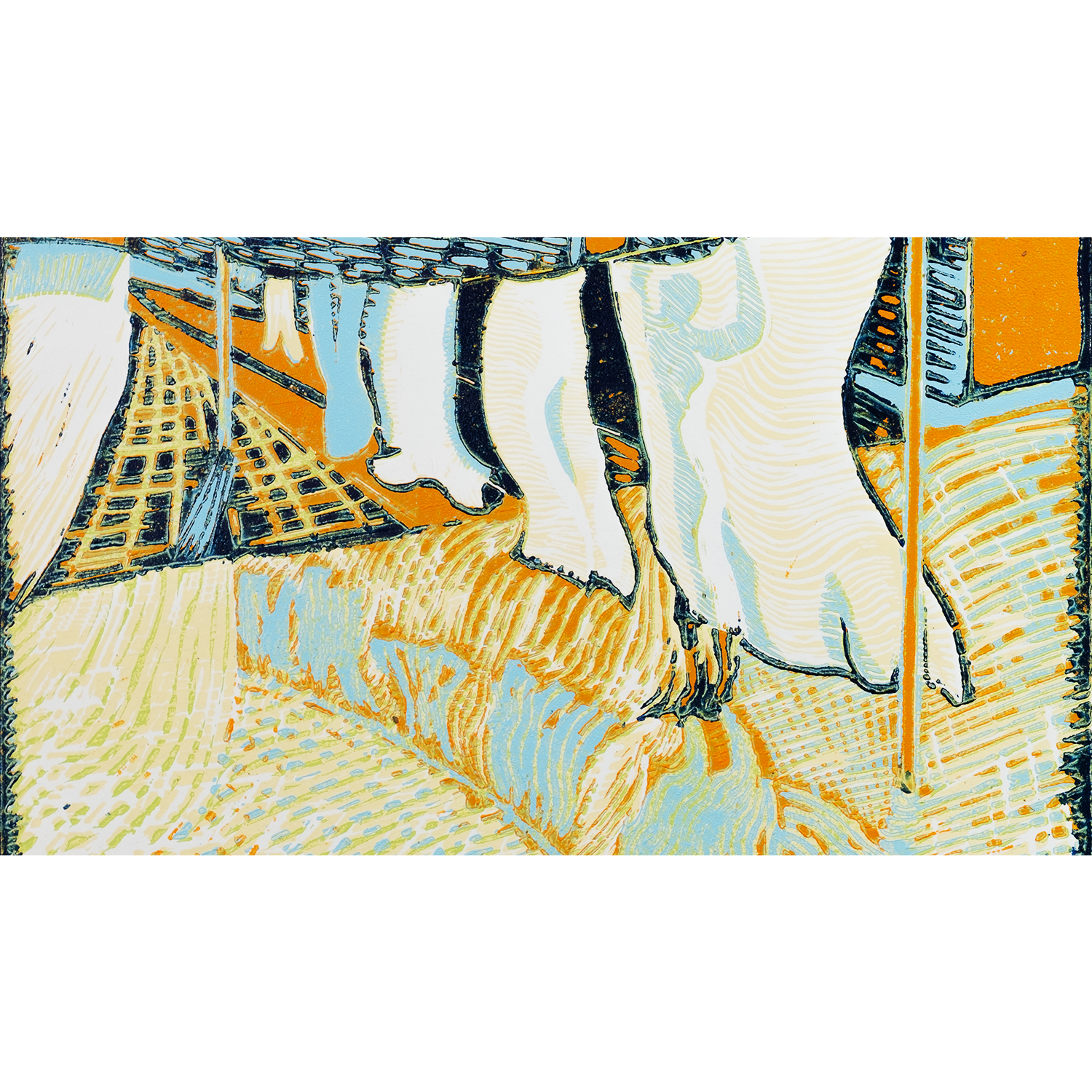
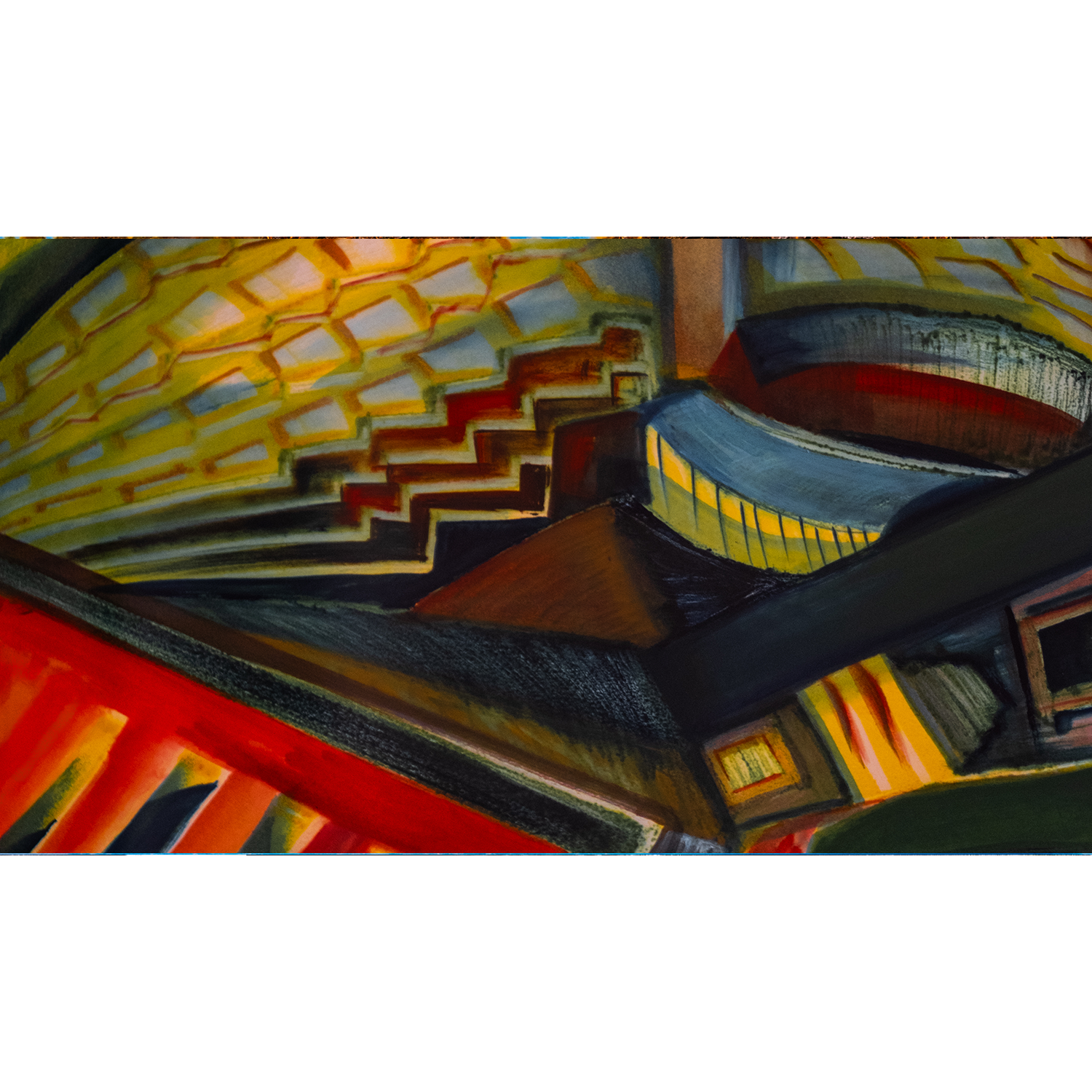
Reminding us how we exist within a landscape
Witnesses
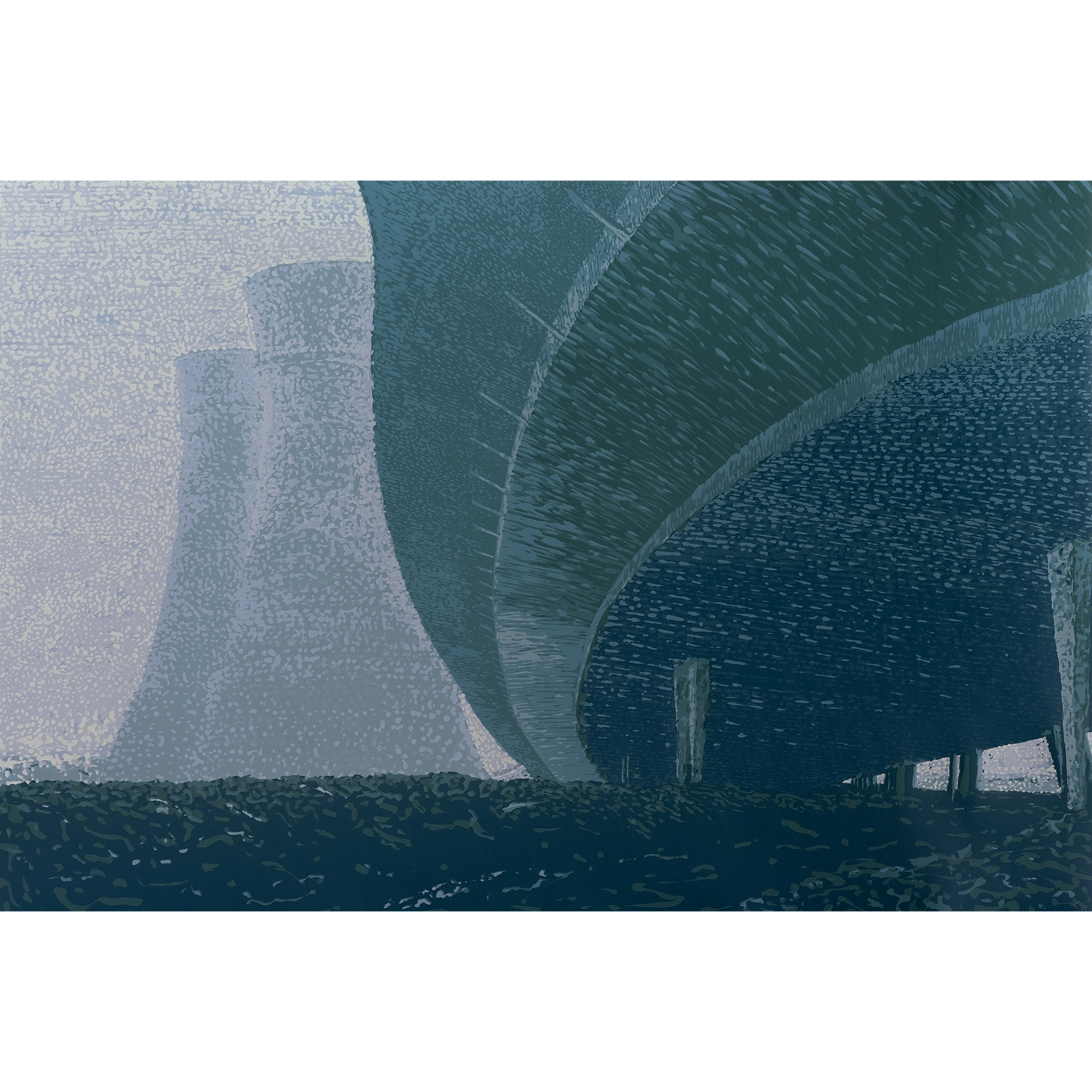
Witnesses emerged as a theme for me when I was living in Frizinghall in Bradford in the late 1980s. Every day, we would see a gasometer from the kitchen window. It was close by. I became fascinated by it; equally, I saw it as an unwelcome blot on the landscape. It was huge. It was ugly. Wherever I went, I would come home to the gasometer. Ever-present, it watched over us. I was intrigued by how the gasometer became familiar, invisible, and after a while, a part of our loved landscape.
The other day, I went looking for another gasometer. I wanted to take some photographs for a print I am currently working on. It’s gone! It was there quite recently, but it has disappeared. And I had not noticed.
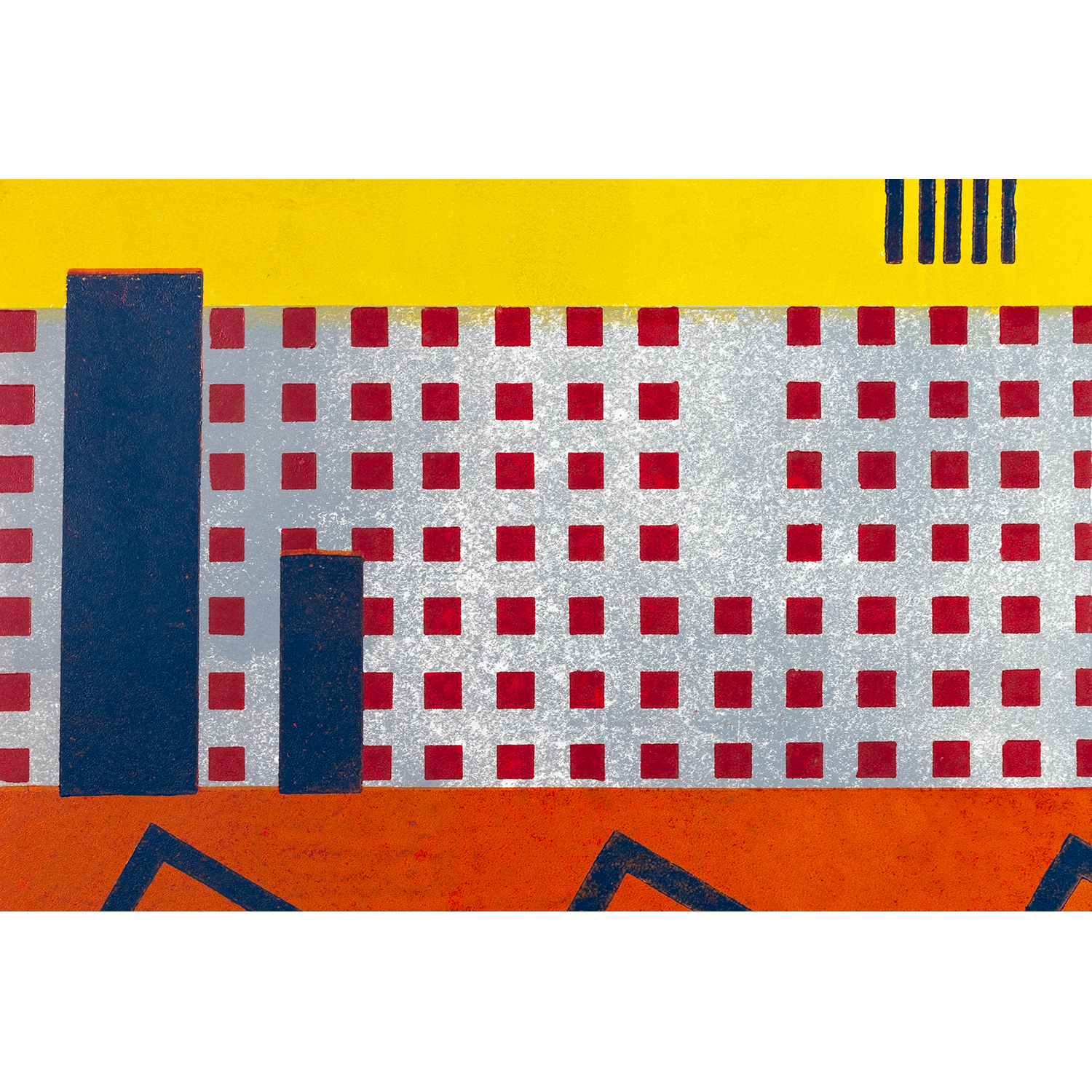
There are two Bruitalist blocks of flats a mile or so away from where I live. I notice hoardings have been put up signalling that these will be taken away. For years, these incongruous monstrosities have looked down on Berry Brow, and while the older and less audacious buildings will remain, a gap will appear, reinstating old views as if nothing had occupied that space before.
In the early 1990s, the landscape in the Pennine hills around us saw the slow introduction of wind turbines. They have an uncanny beauty and a life. These white witnesses catch the light and spring into life as the wind blows. In this way, they are beguiling.
Subsequently, the number of turbines has multiplied exponentially, and to many, they are simply a blight. Arguably, they are necessary as we urgently need to leave fossil fuels behind. They are in the news again. 33 are planned for the moors between Hebden Bridge and Haworth in West Yorkshire - so-called ‘Brontë Country’. As this article sets out, the Calderdale Energy Farm would devastate the existing moorland.
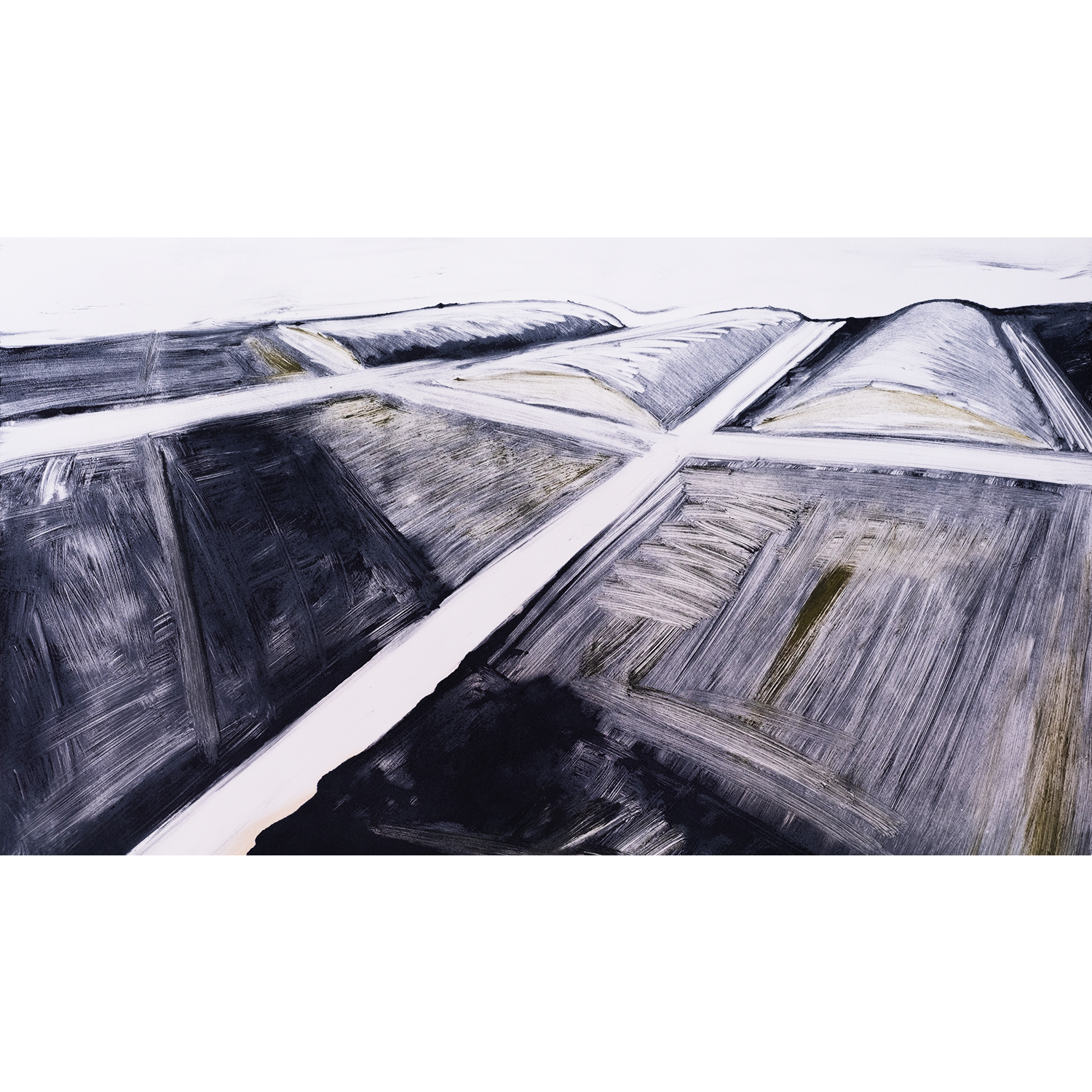
Such structures support human life while, at the same time, disrupting the landscape. Water towers, mine workings, tracks and roads, and mobile masts interfere with the landscape, but we depend upon them anyway.
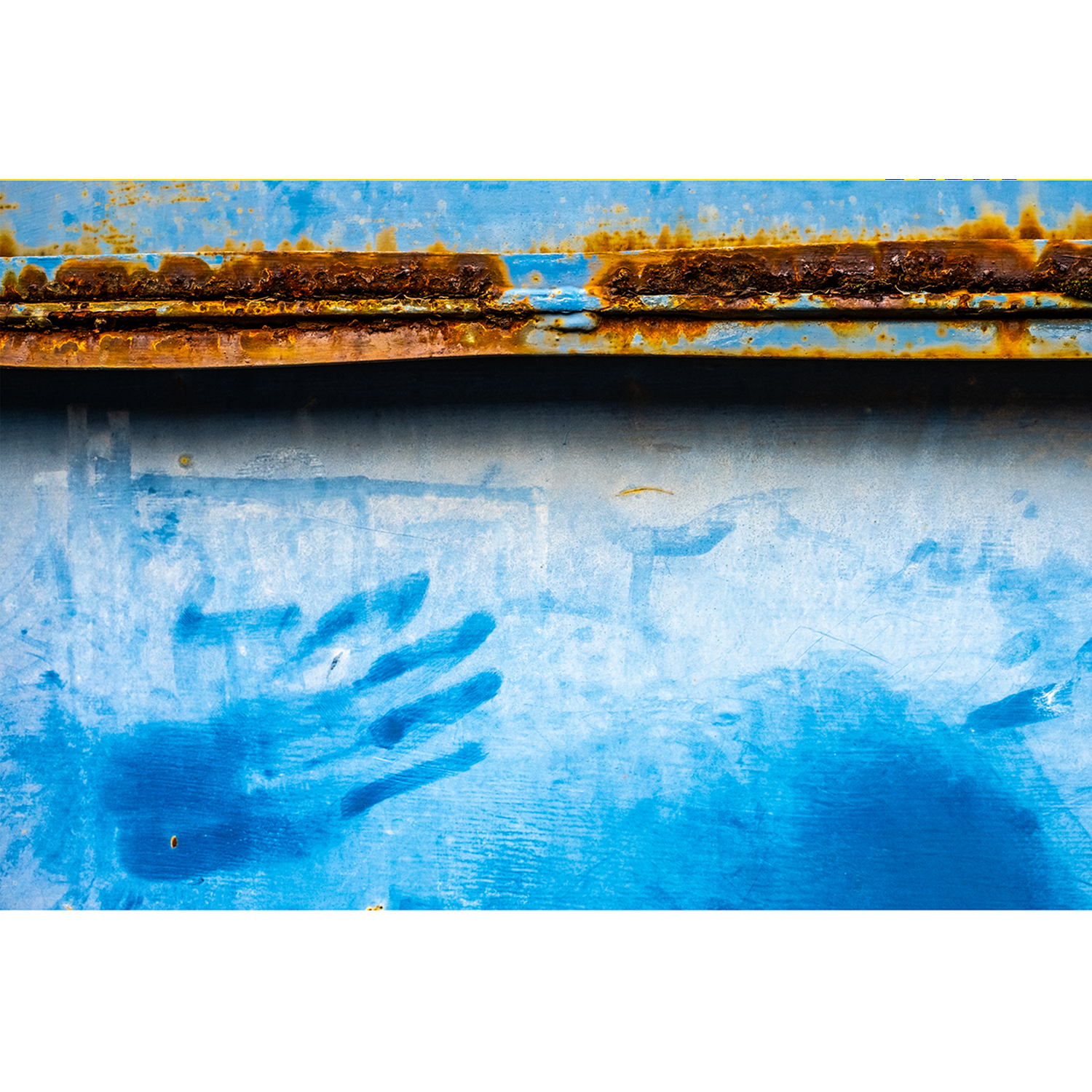
As I walk the canals and cities around Yorkshire, my camera increasingly captures the iron railings that are planted to protect business units. Similarly, the ubiquitous metal shutters that are now installed to protect our shops. Clearly, these security measures have become necessary, but how have we come to accept these ugly ‘keep out’ devices that amplify our common unease?
My interest in such structures as ‘witnesses’ is to record our uneasy relationship with the environment. Their dominance, persistence, and effect are inescapable and powerful.
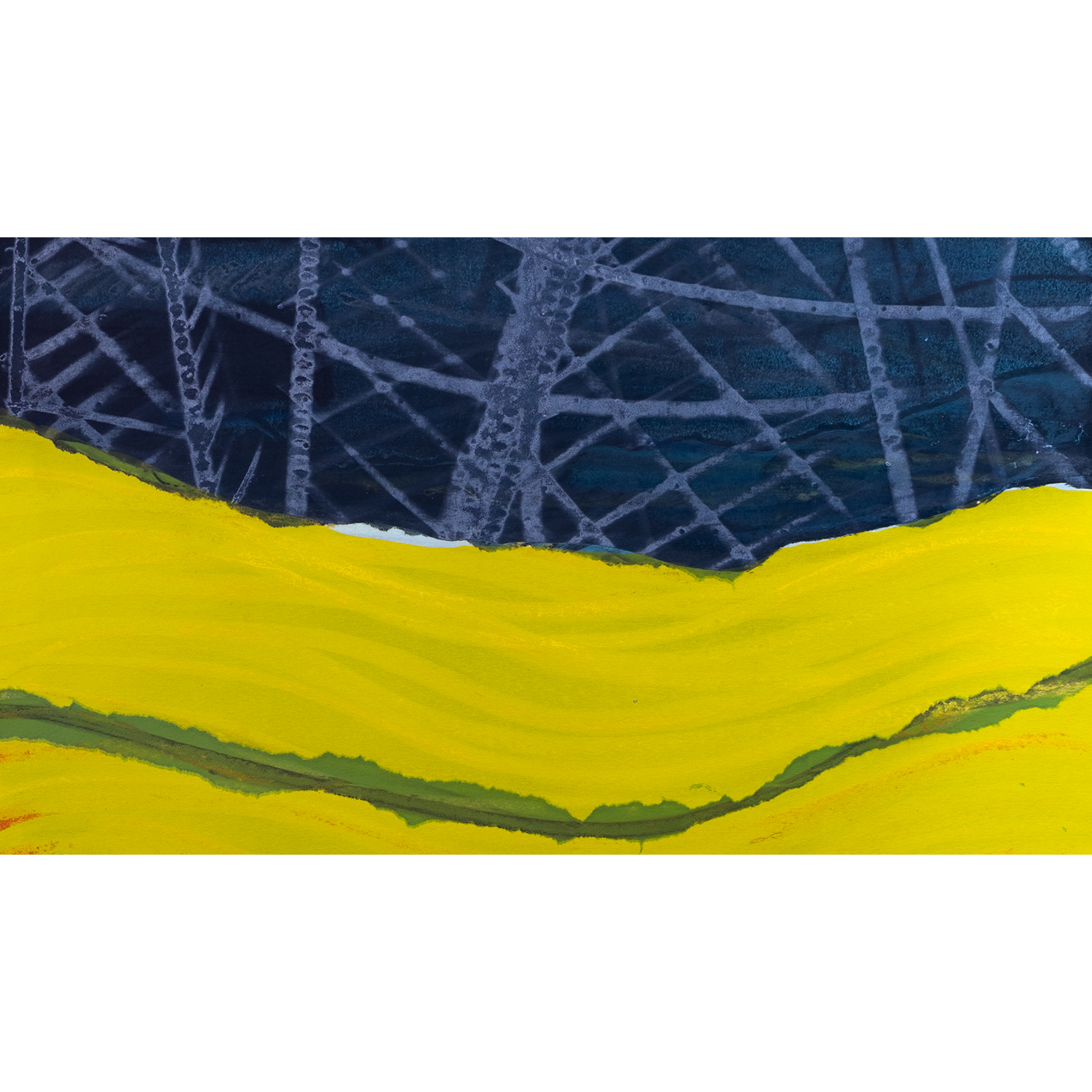
Electricity pylons crossing the Pennines [monoprint]
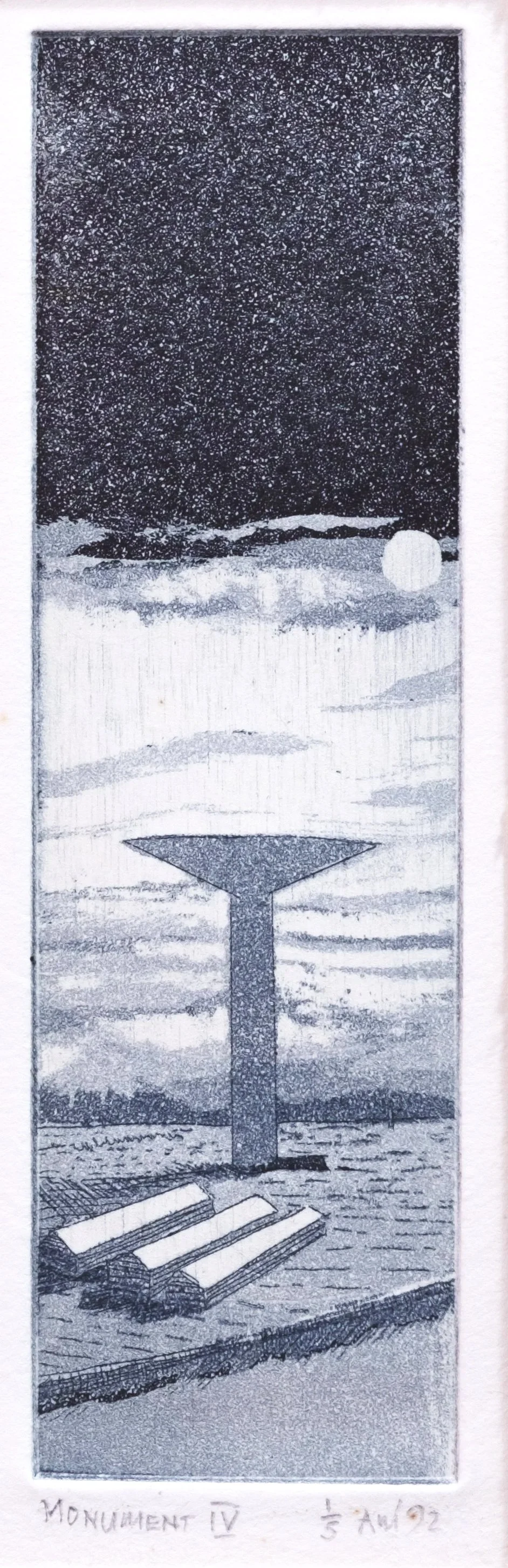
Water tower [aquatint]